
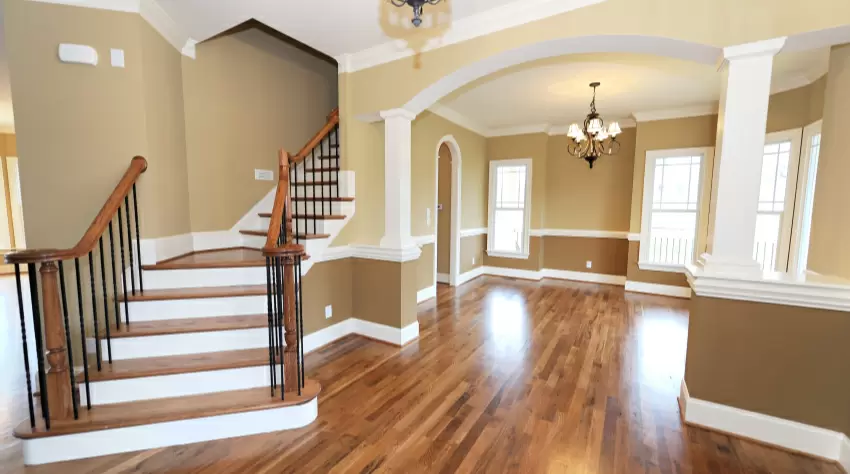
Vaulted ceiling painting is one of those projects that looks simple from the floor. The walls just keep going up. In reality, height changes almost everything about the job, from how the crew reaches the surface to how the finished color looks when the light hits it.
Homes in Happy Valley and across Clackamas County often feature soaring great rooms, two-story entryways, and open stairwells. They are beautiful, and they are some of the hardest spaces in a house to paint well. A standard ladder, a short roller handle, and a free Saturday are rarely enough.
Here are six essential things to understand before you paint a vaulted ceiling or a tall wall, whether you plan to hire it out or just want to know what a good estimate should include.
What Makes Vaulted Ceiling Painting Different?
Vaulted ceiling painting differs from standard ceiling work because of height, access, and visibility. Tall surfaces need specialized equipment such as scaffolds or lifts, more careful planning for safety and cleanup, and a higher standard of prep, because light and sightlines make flaws easy to see from below.
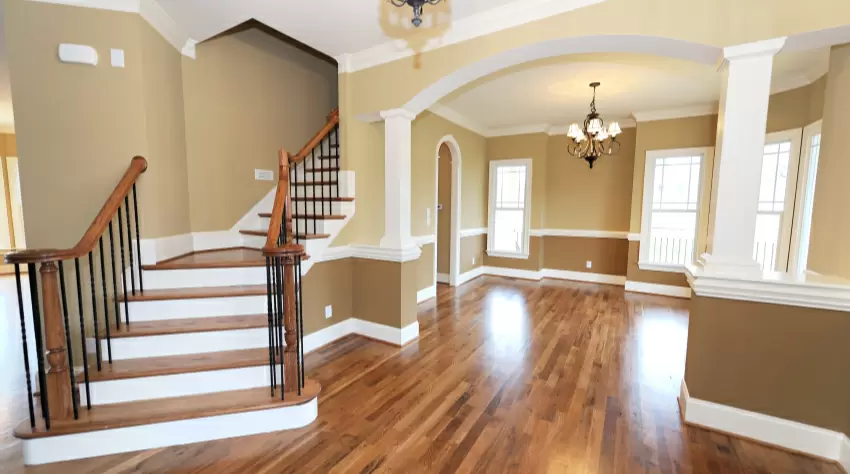
Clean lines and even coverage matter most where the eye travels up a tall wall.
6 Essential Things To Know About Vaulted Ceiling Painting
1. Height changes safety and equipment
Working at height is the biggest risk factor on any interior project. OSHA’s scaffolding guidance requires fall protection for workers on scaffolds more than 10 feet above a lower level, using guardrails or personal fall arrest systems. Ladders alone are not designed for reaching and rolling across a large high surface.
A professional crew plans access before the first coat. Depending on the room, that can mean rolling scaffold, a stable platform over a stairwell, or a mechanical lift. It also means trained people who know how to set it up and use it safely. If a contractor says a single extension ladder will cover it, ask more questions.
2. The room needs protection before the work starts
Tall surfaces mean paint, dust, and drips fall a long way. Floors, stairs, railings, light fixtures, and furniture all need protection, and in an open great room that can mean covering far more than the walls you are painting.
Good prep includes drop cloths, plastic sheeting, careful taping, and moving or covering furniture. It also includes a plan for stairs and entryways, since equipment often has to be set up over them. Cleanup at the end is part of the job, not an afterthought.
3. Light and color behave differently up high
Color is light reflecting off a surface, and tall walls catch light in unusual ways. Clerestory windows, skylights, and open stairwells bring light from multiple directions, which can make one color look different at the top of a wall than at the bottom.
Sherwin-Williams color experts note that light direction and sheen both change how paint appears. For vaulted ceiling painting, test samples high on the wall as well as at eye level, and look at them in morning, afternoon, and evening light before you commit. A sample on a low wall does not tell the whole story.
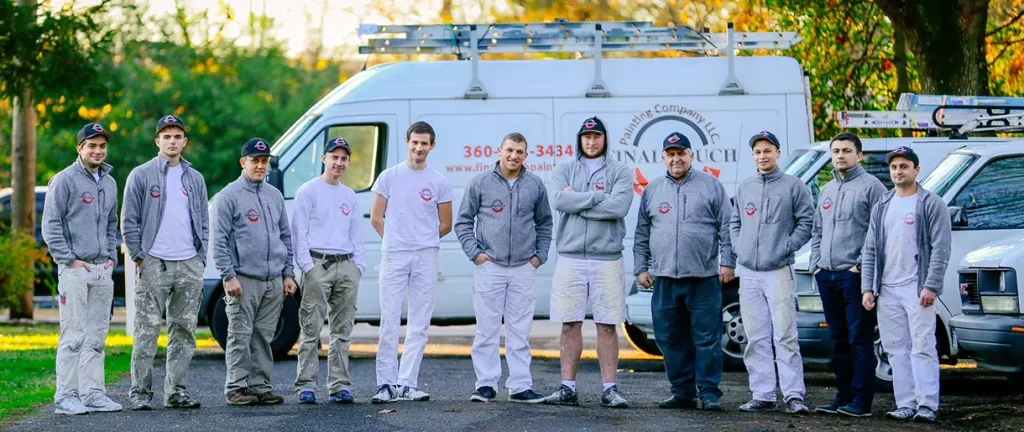
A trained crew with the right equipment makes tall spaces safer and more efficient.
4. Sequence and technique matter more on tall surfaces
On most rooms, painters start at the top and work down, so ceilings come first, then walls, then trim. On a vaulted ceiling, that sequence matters even more, because drips and splatter come from above and the transitions between ceiling, wall, and beams are difficult to correct later.
Cutting in cleanly along sloped lines, beams, and high corners takes skill. Long poles, steady scaffolding, and good lighting let a painter work accurately without stretching. The goal is crisp edges and even coverage across the entire surface, without lap marks that show in raking light.
5. Preparation has to happen at height too
Cracks, nail pops, stains, and old repairs on a high ceiling are just as important as those at eye level, and they are often more visible because they sit in the path of side light. Repairs need to be patched, sanded, primed, and, where there is texture, matched.
That is one reason we handle drywall repair and texture matching as part of the project. Sherwin-Williams guidance for interior painting also emphasizes sanding between coats where needed to create a smooth surface. High walls deserve the same care as low ones.
6. Time, cost, and scheduling look different
Tall spaces take more labor and more equipment, so the estimate will reflect that. Setting up and moving scaffolding, protecting large areas, and working at height all add time, and a trustworthy estimate explains why.
Scheduling matters too, especially for people who work from home. A good crew communicates clearly, plans noisy or disruptive steps for the right times, and respects calls and meetings. One of our customers noted how considerate the crew was while working in a home office environment, and that kind of planning is part of the service.
Common Mistakes With Vaulted Ceiling Painting
We often get called after a DIY attempt goes sideways. These are the issues we see most:
- Using an unstable ladder or an improvised platform to reach high areas
- Painting walls before ceilings, then having to touch up drips
- Skipping repairs on high cracks and nail pops that show in side light
- Choosing a color from a low sample without checking it high on the wall
- Leaving visible lap marks because sections dried before the next was painted
- Underestimating prep and cleanup in an open, multi-level space
Most vaulted ceiling painting problems come back to planning. Height rewards preparation and punishes shortcuts.
What Drives the Cost of Vaulted Ceiling Painting?
Several factors move the price of vaulted ceiling painting up or down: the height and size of the surfaces, how much equipment is needed, the condition of the ceiling and walls, the amount of repair and texture work, and how much of the room must be protected.
Two rooms with the same square footage can have very different costs if one needs scaffolding and the other does not. This is why we recommend an on-site estimate and why you should be wary of a quote given sight unseen.
How Long Does Vaulted Ceiling Painting Take?
Most rooms take longer than homeowners expect because setup and cleanup are a larger share of the work. A typical project includes protecting the space, setting up access, repairs, priming where needed, painting the ceiling, then the walls, and finally cleanup and a walkthrough.
Your painter should give you a realistic schedule, including days when equipment is in the room, so you can plan around it. Smaller entryways may move quickly, while large open great rooms take more time.
What a Good Estimate for a Tall Space Should Include
When you collect bids for vaulted ceiling painting, look for clarity on the items that matter most:
- The surfaces included, such as ceilings, walls, beams, and trim
- How the crew will reach high areas and what equipment will be used
- How floors, stairs, and furniture will be protected
- What repairs and texture matching are included before painting
- Paint products, number of coats, and sheen
- Schedule, working hours, and cleanup
An on-site visit is the best way to get an accurate estimate. Photos help, but a painter standing in your entryway can see access, lighting, and conditions a photo hides.
How Final Touch Painting Co. Handles Tall Interior Spaces
Our interior painting services include ceilings, walls, trim, and doors, and our process starts with a free estimate and consultation where we assess your project and give clear recommendations. Next, our team handles surface preparation and repairs, then applies premium paint, and finishes with a detailed walkthrough and cleanup.
We have served the Portland metro area since 2009, including Happy Valley, Clackamas, Oregon City, and Vancouver. We use top-grade paints from Sherwin-Williams and Miller so the finish holds up.
Frequently Asked Questions
Can you do vaulted ceiling painting without scaffolding?
It depends on the height and layout. Some areas can be reached safely with the right ladder setup, while tall or open spaces usually call for scaffolding or a lift. Safety and quality both improve with the right access.
Should the ceiling be painted before the walls?
Usually, yes. Painting from top to bottom keeps drips and splatter from ruining finished walls. The exact order is planned for each room.
Will my vaulted ceiling need a different paint?
Not always, but ceilings often use flat or matte paint because it hides flaws and reduces glare. We recommend a product and sheen based on the room, the light, and how you use the space.
Give Your Tall Spaces the Final Touch
If your Happy Valley home has a vaulted ceiling or a two-story entryway that needs paint, and you want vaulted ceiling painting done safely and cleanly, call Final Touch Painting Co. at 360-607-3434 or request a free estimate, and we will walk through the space with you.
Sources
- OSHA: Scaffolding. Federal safety guidance for scaffolds, including fall protection when working at height.
- Sherwin-Williams Blog: How Light and Finish Affect Paint Color. How light direction and sheen change the way a color looks in a room.
- Sherwin-Williams: Interior and Exterior DIY Painting Techniques. Preparation, tools, and technique tips for interior painting, including sanding between coats.


Leave a Reply