Dry rot is wood decay caused by fungi, and despite the name, it only happens in wood that gets wet and stays wet. You'll find it where water sits or soaks in: window sills, trim, fascia, door frames, chimney chases and the bottom of siding. Rotted wood feels soft, crumbles, turns dark or cracks into small blocks. It gets fixed before painting because paint can't make rotted wood solid again. Paint only covers it, and the new paint fails along with the wood underneath. Our two in-house carpenters cut the rot out and replace it, and then we prime and paint.
Here's what dry rot is, where to look for it, how to tell, and how the repair works.
What dry rot is
Dry rot is decay: fungi growing through the wood and feeding on it. The name is misleading. The USDA Forest Products Laboratory's Wood Handbook says brown, crumbly rot is sometimes called dry rot when it's dry, but the term is incorrect, because wood has to have moisture to decay, even if it dries out later.
How wet does wood have to be? According to the Wood Handbook, serious decay happens only when the wood's moisture content is above the fiber saturation point, which averages 30%. Dry wood gets that wet from rain, condensation or contact with wet ground. Humid air on its own won't do it. Air-dried wood is usually at 20% or less, and wood that's kept that dry won't decay. Rot that's already in it stops spreading.
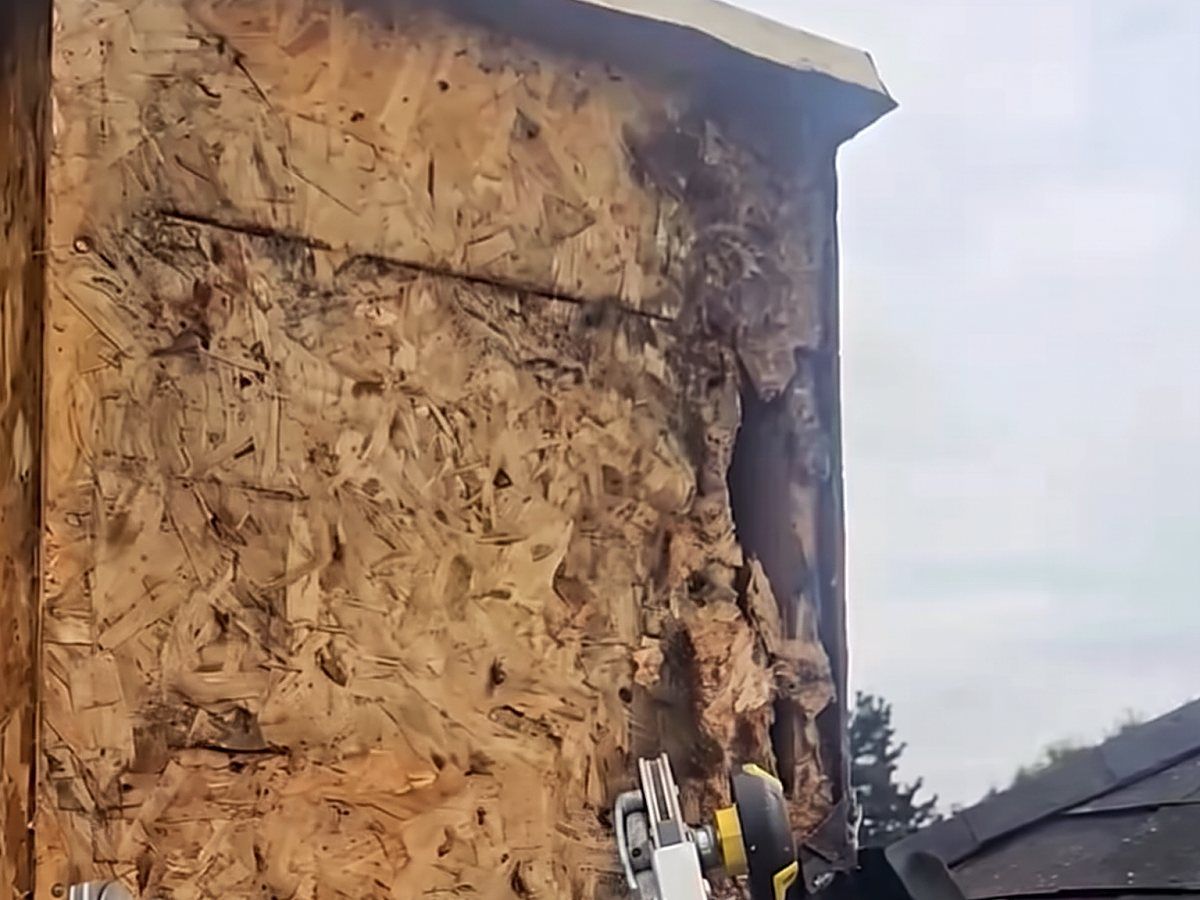
The rot that earned the name is brown rot. The handbook says brown rot turns wood browner and can make it crack across the grain into cube-like chunks, shrink, collapse and crumble to powder. White rot, the other main kind, can leave wood bleached and spongy instead, without the cracking.
A few brown rot fungi can even form water-conducting strands that carry water, usually from the soil, into a building, where they wet and decay wood that would otherwise be dry. The handbook says “water-conducting fungi” is the better name for them, because like every other decay fungus, they still need water.
So dry rot is really a water problem, and wood here gets plenty of water. NOAA's 1991–2020 climate normals put Vancouver Pearson Airfield at 37.47 inches of precipitation a year, with measurable precipitation on 162.9 days. Portland International Airport is close behind, at 36.92 inches on 157 days.
Where it shows up on houses here
Rot starts where water sits, soaks in or can't dry out. On houses here, these are the usual spots:
- Window sills. They're close to flat, so rain sits on them instead of running off, and water works into the joints at the corners.
- Trim. Corner boards and window and door trim rot where caulk has cracked and water gets in behind the paint.
- Fascia. This is the board along the edge of the roof, behind the gutter. When a gutter clogs or overflows, water runs down it. The Wood Handbook calls roof edges a critical spot and recommends keeping gutters and downspouts free of debris.
- Door frames. The bottoms of the frames take splash-back and the water that collects at the threshold.
- Chimney chases. A chase is the framed box built around a chimney flue, and the joint where it meets the roof has to shed water. The handbook names points where roofs meet walls as critical spots. Water that gets past that joint, or in at the top of the chase, can soak the sheathing behind the siding, where you can't see it.
- The bottom of the siding. Boards close to soil, mulch or a deck stay wet and take splash from rain and sprinklers. The handbook recommends at least 6 inches between soil and siding.
What these spots share is water: a flat surface it can sit on, a joint it can get into, or ground it can splash up from.
How to spot it
You don't need special tools. On a dry day, walk around the house with a screwdriver and check the spots above.
- Press it. Push the tip of the screwdriver into the wood. Sound wood resists. Rotted wood feels soft or spongy, the tip sinks in, or the wood crumbles.
- Look at the color. Dark, stained or blotchy wood is a warning. The Wood Handbook notes that unnatural brown or bleached patches are often evidence of decay.
- Look for cracks across the grain. Brown rot can break wood into small, cube-like chunks.
- Watch the paint. Paint that bubbles, cracks or peels in one spot while the rest of the wall looks fine can mean wet wood underneath.
- Check for growth. Decay fungi can show on the surface as white or brown fan-shaped patches or strands, and sometimes as mushrooms, brackets or crusts.
- Notice carpenter ants. The handbook says carpenter ants usually prefer wood that's naturally soft or softened by decay, and window sills are one of the parts of a house they frequent most. Carpenter ants nesting in a house can point to a moisture problem somewhere in it.
Early rot is easy to miss. The handbook says the first stages of decay often come with a discoloration that can be hard to recognize. That's one reason some rot only turns up during prep, once old paint and caulk come off.
If you find a soft spot, don't paint over it. Note where it is, and we'll look at it during your free estimate.
Why it gets fixed before painting
Paint protects sound wood from water and sun. It can't make rotted wood solid again. That's why rot gets fixed first, for four reasons:
- The wood is weaker than it looks. The Wood Handbook says decay first cuts into wood's toughness, its ability to take a knock, and eventually seriously reduces all of its strength properties. It also says wood with decay you can see may be assumed to have lost a great deal of its strength. Paint doesn't give any of that back.
- Paint won't hold. Soft, crumbling wood gives new paint nothing solid to grip, so it peels.
- Paint hides the problem. Painting over rotted wood only hides it. The rot is still there under the new paint, out of sight until the paint fails.
- Rot can keep spreading. As long as the wood stays wet, the decay can keep going. The Wood Handbook notes that when there's enough moisture, most types of decay can progress rapidly at moderate temperatures.
There's a practical reason, too. When the repair is part of your repaint, the new wood is primed and painted along with the rest of the house, and one company handles the job from the first cut to the final coat.
“They even found and repaired dry rot before painting, never cutting corners.”
How we repair it
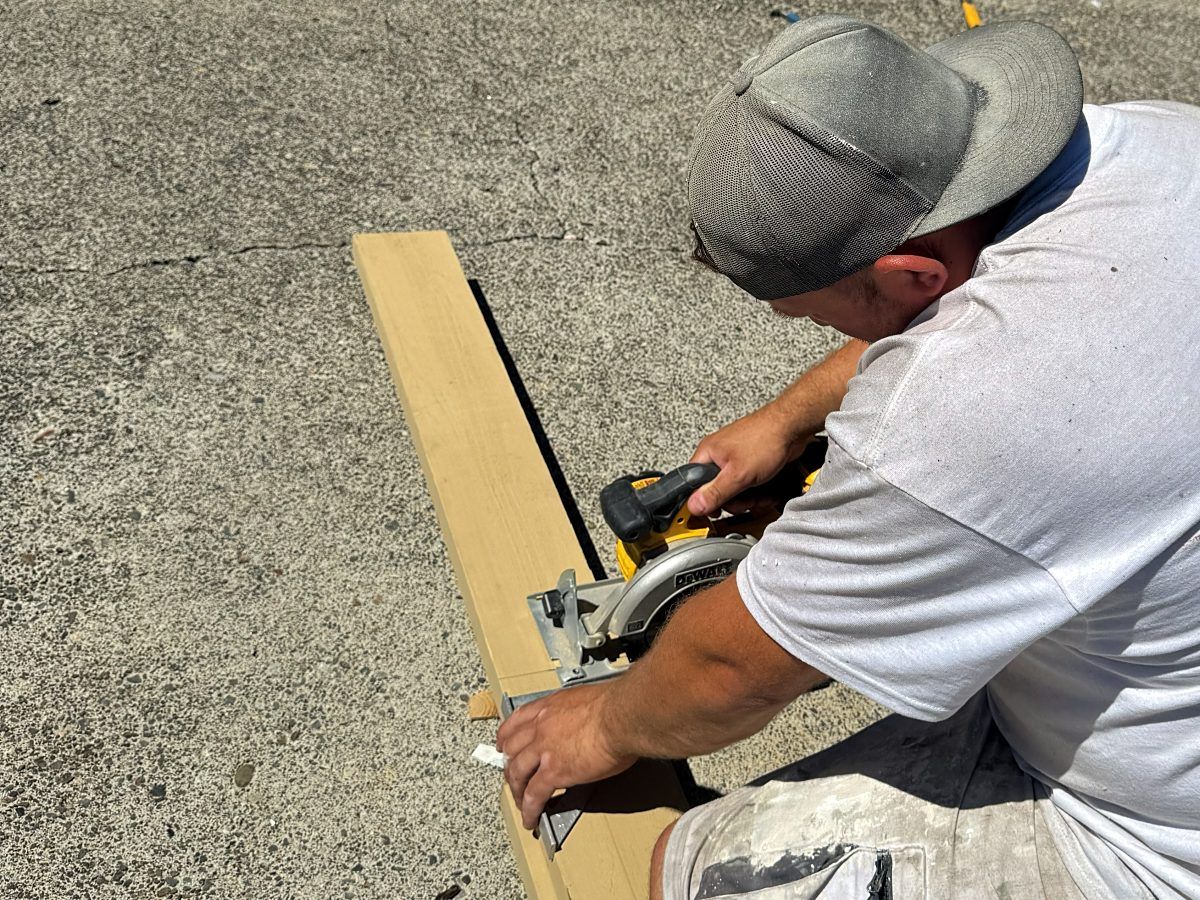
Our two in-house carpenters handle dry rot repairs, so there's no outside contractor to hire or coordinate. The repair comes down to four steps.
Find it
We check sills, trim, fascia, door frames and lower siding for wood that's soft, crumbly or dark. If we find rot at your estimate, we point it out and quote the repair. If it turns up during prep, we bring it to your attention and quote the repair then.
Cut out the rotted wood
The rotted wood comes out, back to solid wood, so no soft wood is left under the repair.
Replace it
New material goes in where the rot came out, cut to fit the trim, sill or siding around it.
Prime and paint
The new wood is primed, the joints are caulked, and the repair is painted with Sherwin-Williams exterior paint so it blends in with the rest of the house.
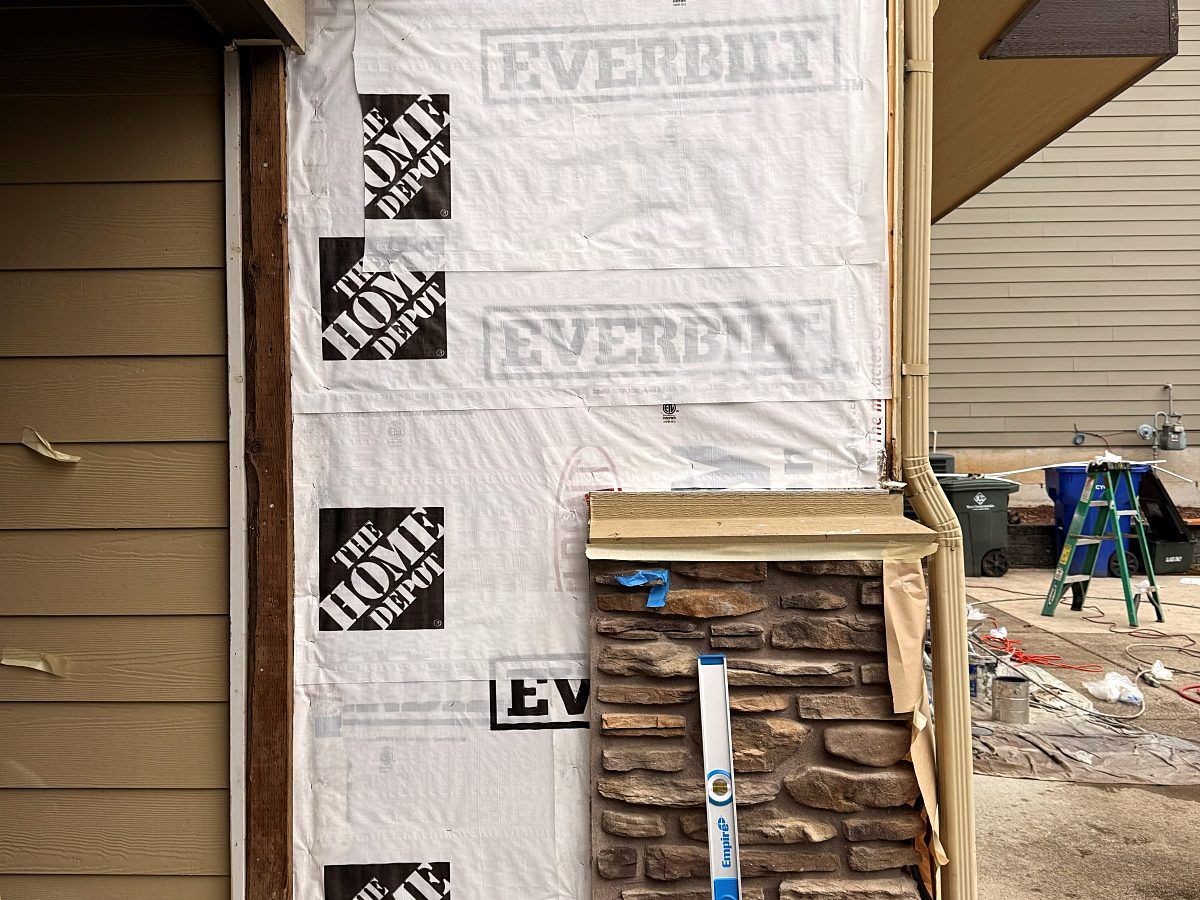
Some repairs are small, like a section of sill or a single trim board. Others go deeper, like the chimney chase in the photo above, where the siding had to come off to reach the rotted sheathing behind it. Whichever kind you have, you'll know what's being repaired before the work starts.
If the repair is part of an exterior repaint, it goes into your written scope, so it's fixed before the new paint goes on. We also repair dry rot as a stand-alone job. When it's done, we look over the finished repair with you, and if anything needs a touch-up, we handle it on the spot. The work is backed by our 5-year workmanship warranty. Ask us for the details.
Keeping it from coming back
Replacing the wood fixes the damage, not the water that caused it. The Wood Handbook's advice for any decay repair is to make every effort to correct the moisture condition that led to it. A few things help:
- Keep gutters and downspouts clear, so water doesn't spill over the fascia.
- Keep soil, bark and mulch at least 6 inches below the bottom of the siding.
- Aim sprinklers away from the walls.
- Keep caulk and paint in good shape on sills and trim, and touch up chips before bare wood takes on water.
- Have a roofer check for leaks at the roof edges and around the chimney.
- Clear stumps, scrap wood, stakes and old form boards from under and around the house. The handbook notes they often decay and can become a source of decay for the building.
- Watch for leaks inside, too. The handbook notes that plumbing leaks can cause serious decay inside a building, especially when they go unnoticed for a long time.
Rot that's caught early means a smaller repair, so a yearly walk around the house with a screwdriver is time well spent. Our guide to when to paint your house exterior covers the other signs to look for on that walk.
Dry rot questions
Is dry rot actually dry?
No. Wood has to be wet to rot. The name comes from brown rot, which can look dry and crumbly once the wood dries out, but the decay started while the wood was wet.
Can I just paint over dry rot?
No. Paint covers rotted wood but doesn't make it solid, and the rot is still there under the new paint. We cut it out and replace it before we paint.
How can I tell if my window sills have dry rot?
Press a screwdriver tip into the wood on a dry day. Sound wood resists. Rotted wood feels soft, lets the tip sink in or crumbles. Dark stains, cracks across the grain and paint that keeps peeling in one spot are other signs.
Can you fix dry rot as part of an exterior repaint?
Yes. If we find rot at your estimate or during prep, we point it out and quote the repair. Our two in-house carpenters fix it before the new paint goes on.
How much does dry rot repair cost?
It depends on how much wood is damaged and where it is. We don't post prices. A free estimate gets you a written price for your repair.
Found soft or dark wood? See how our dry rot repair works and what goes into exterior painting, ask about the free paint upgrade and financing, then request your free estimate or call (360) 607-3434.