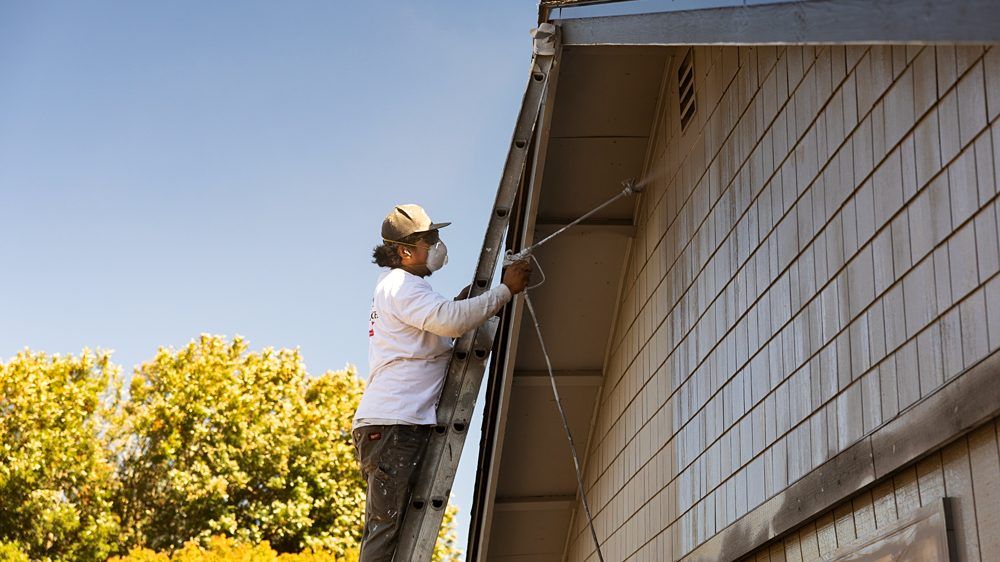
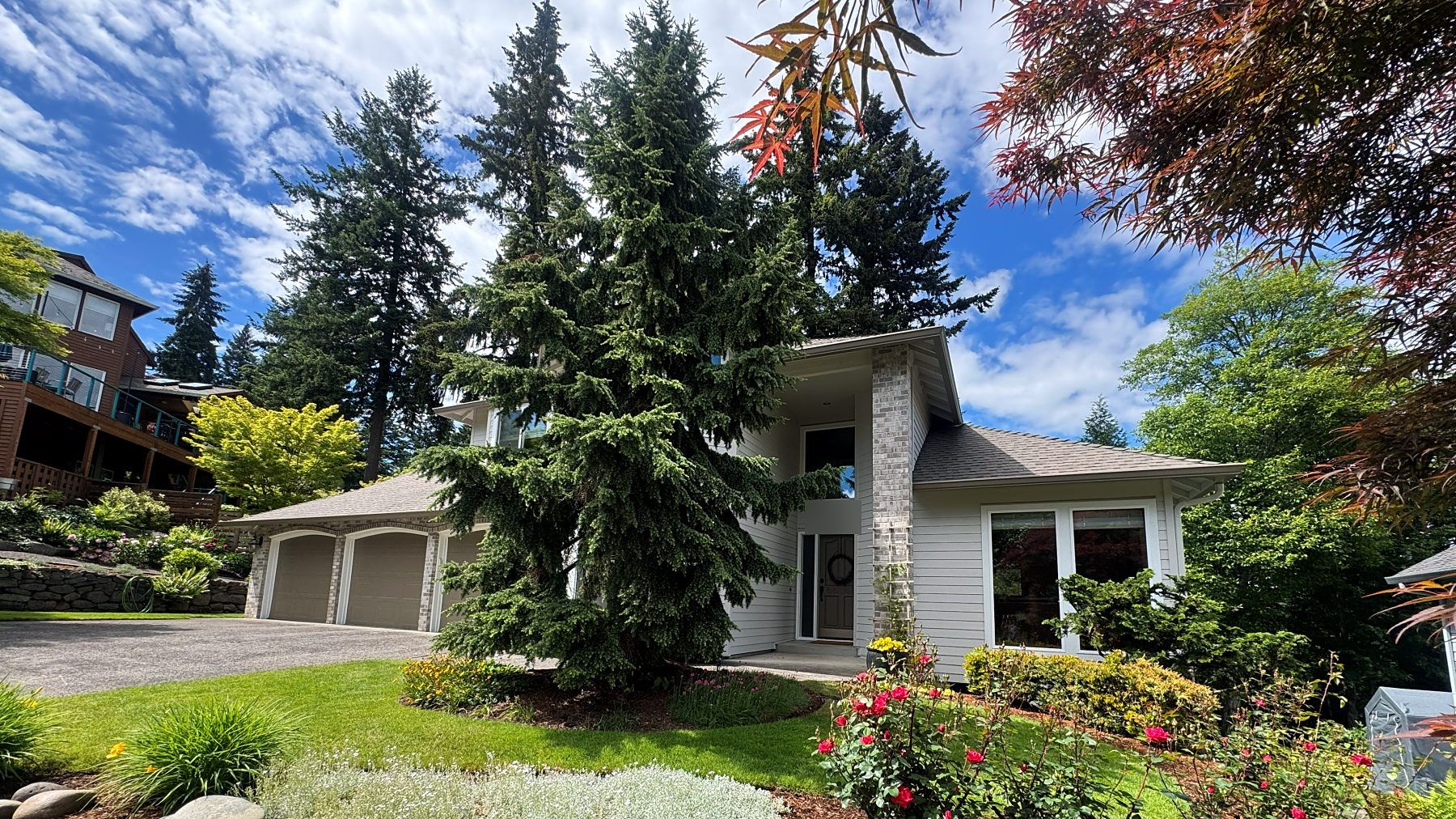
Here in Southwest Washington and the Portland metro, our exterior painting season typically runs from April through mid-November, and July and August are the driest months. NOAA's 1991–2020 climate normals show 0.51 inch of precipitation in July and 0.54 inch in August at Portland International Airport, and 0.42 and 0.52 inch at Vancouver Pearson Airfield. Spring and fall work too, between showers, as long as the weather meets Sherwin-Williams' conditions: at least 35°F, a dry surface at least 5° above the dew point, and no rain due for a few hours. And if your paint is already peeling or the wood is showing, the right time to start planning is now, not next summer.
Below: what the weather records show month by month, what paint needs to go on properly, the signs your house is due, and how to plan the job.
Our exterior painting season
Our exterior painting season typically runs from April through mid-November. Inside that window, the forecast decides the day. We schedule projects around the forecast, and if the weather isn't right for painting, we may adjust the schedule rather than paint in the wrong conditions.
Most exterior projects take about 2–3 days, depending on size, condition and weather. So you don't need a dry month. You need a few dry days in a row, and the records below show they're easiest to find from July through September.
In colder or wetter weather, we may use Sherwin-Williams Resilience or Latitude, coatings we choose for those conditions.
When the conditions below are met, a spring or fall repaint goes on the same way a summer one does. What changes is how often the schedule has to move around the weather.
What the weather records show
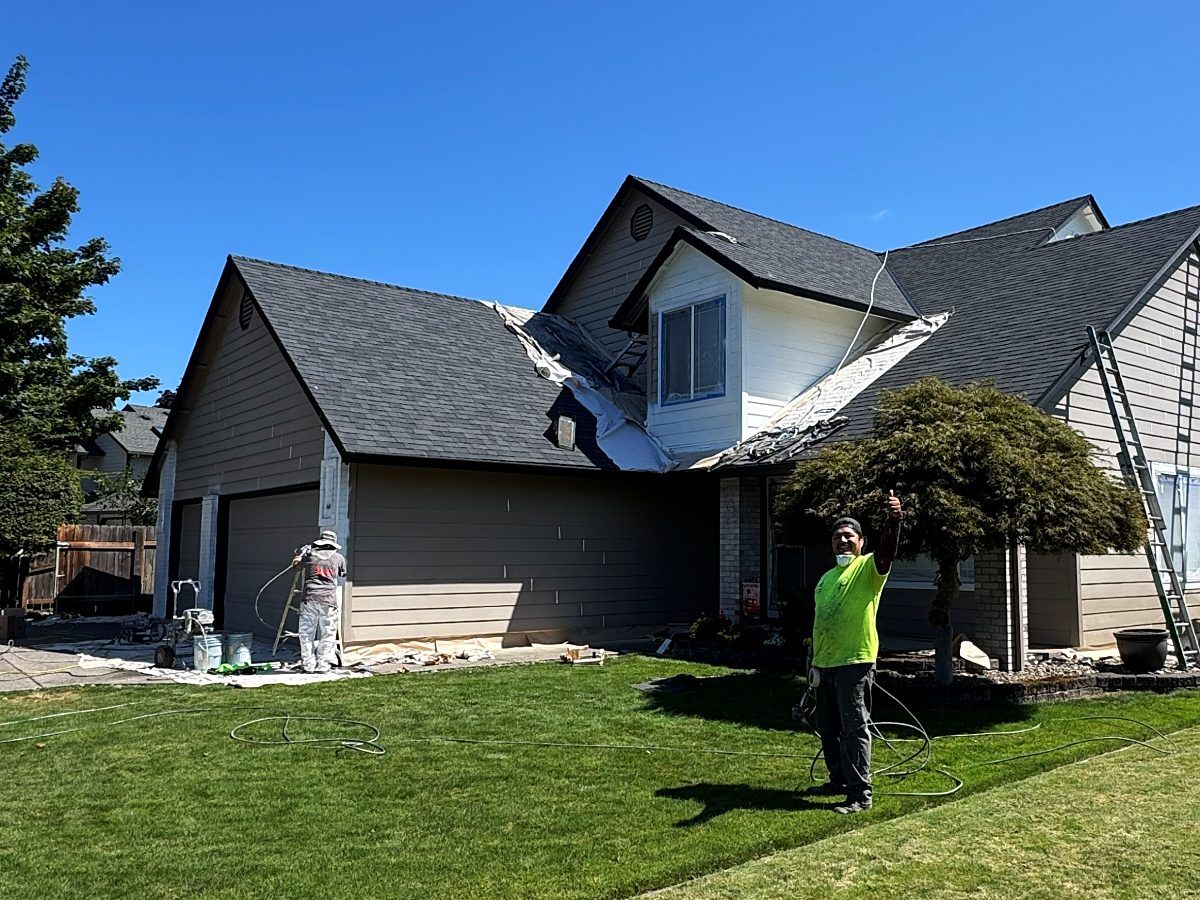
NOAA's U.S. Climate Normals are 30-year averages of weather station records. These are the 1991–2020 monthly precipitation normals for two local stations, Portland International Airport and Vancouver Pearson Airfield:
| Month | Portland Intl. Airport | Vancouver Pearson Airfield |
|---|---|---|
| January | 5.03 in., 18.7 days | 5.34 in., 20.0 days |
| February | 3.68 in., 15.7 days | 3.77 in., 16.5 days |
| March | 3.97 in., 17.8 days | 3.95 in., 18.7 days |
| April | 2.89 in., 17.4 days | 2.93 in., 16.1 days |
| May | 2.51 in., 13.2 days | 2.51 in., 13.1 days |
| June | 1.63 in., 9.2 days | 1.61 in., 9.0 days |
| July | 0.51 in., 3.7 days | 0.42 in., 3.6 days |
| August | 0.54 in., 3.6 days | 0.52 in., 3.5 days |
| September | 1.52 in., 6.7 days | 1.43 in., 7.4 days |
| October | 3.42 in., 13.5 days | 3.41 in., 15.7 days |
| November | 5.45 in., 18.3 days | 5.51 in., 19.0 days |
| December | 5.77 in., 19.2 days | 6.07 in., 20.3 days |
| Year | 36.92 in., 157 days | 37.47 in., 162.9 days |
Inches are average precipitation. Days are the average number of days with measurable precipitation, 0.01 inch or more. Source: NOAA National Centers for Environmental Information, 1991–2020 monthly normals for the stations PORTLAND INTL AP, OR and VANCOUVER PEARSON AP, WA.
Two things stand out. July and August each get less than a tenth of the precipitation that November or December gets. And even in those dry months, precipitation falls on three or four days a month on average, so a summer job still gets scheduled around the forecast.
Your own street may be wetter than the airports. NOAA's normals put its Battle Ground station at 52.37 inches a year and a station 2.4 miles east of Camas at 54.48 inches. The pattern holds, though: July and August are still the driest months there, at 0.63 and 0.80 inch in Battle Ground and 0.77 and 0.72 inch near Camas.
Temperature matters at the edges of the season. Average daily lows at Portland International Airport are 43.7°F in April, 46.7°F in October, 40.6°F in November and 36.2°F in December. At Vancouver Pearson Airfield they're 42.2°F, 44.8°F, 39.4°F and 35.0°F.
The conditions paint needs
Sherwin-Williams sets the conditions for its paint. Its exterior lines can go on down to 35°F, as long as the surface is dry and at least 5° above the dew point, and no rain is expected for a few hours. Each of those rules shapes the season:
- 35°F and up. Average November lows of 40.6°F at the airport and 39.4°F at Pearson are close to that line, and December's are closer still. Averages also hide cold snaps: any given night can be colder.
- A dry surface. Rain, dew and frost all count as wet. A wall that got rained on yesterday can still be damp today, especially on a shady side.
- 5° above the dew point. The dew point is the temperature at which moisture in the air condenses on surfaces. On cool mornings and evenings, siding can cool to the dew point and get damp without any rain. In fall, that leaves a shorter stretch of each day when the siding is dry and warm enough.
- No rain for a few hours. Fresh paint needs time before rain hits it. If the forecast turns, the job waits.
Inside is different. Sherwin-Williams' interior lines need temperatures above 50°F, and a heated house is usually warmer than that, so interior painting doesn't depend on the season.
Spring, summer, fall and winter
Spring: April to June
Spring temperatures usually work. Rain is the issue. April averages 2.89 inches at Portland International Airport, with measurable precipitation on 17.4 days, and May averages 2.51 inches on 13.2 days. By June it's down to 1.63 inches on 9.2 days. Spring jobs fit between showers, and some days get moved.
Summer: July and August
These are the driest months in the normals: 0.51 inch in July and 0.54 inch in August at the airport, and 0.42 and 0.52 inch at Pearson. If you want a summer date, get your estimate done early, so your colors, products and scope are settled before the weeks you want.
Fall: September to mid-November
September is still fairly dry, at 1.52 inches on 6.7 days at the airport and 1.43 inches on 7.4 days at Pearson. October more than doubles that: 3.42 inches on 13.5 days, and 3.41 inches on 15.7 days. November brings 5.45 inches on 18.3 days at the airport and 5.51 inches on 19.0 days at Pearson, with average lows near 40°F. That's the weather behind a season that typically ends in mid-November.
Winter: December to March
December is the wettest month at both stations, with 5.77 inches at the airport and 6.07 inches at Pearson, and average lows of 36.2°F and 35.0°F. Winter is the time to plan the exterior and paint inside: get your estimate, settle on colors and have your scope ready for spring.
Signs your house is due for paint
Your house tells you when it needs paint. Walk around it once a year, look closely at both the sunny and the shady sides, and check for these. Fading and chalking tend to show first on south- and west-facing walls, which get the most sun, and mildew on the north side and in shaded corners.
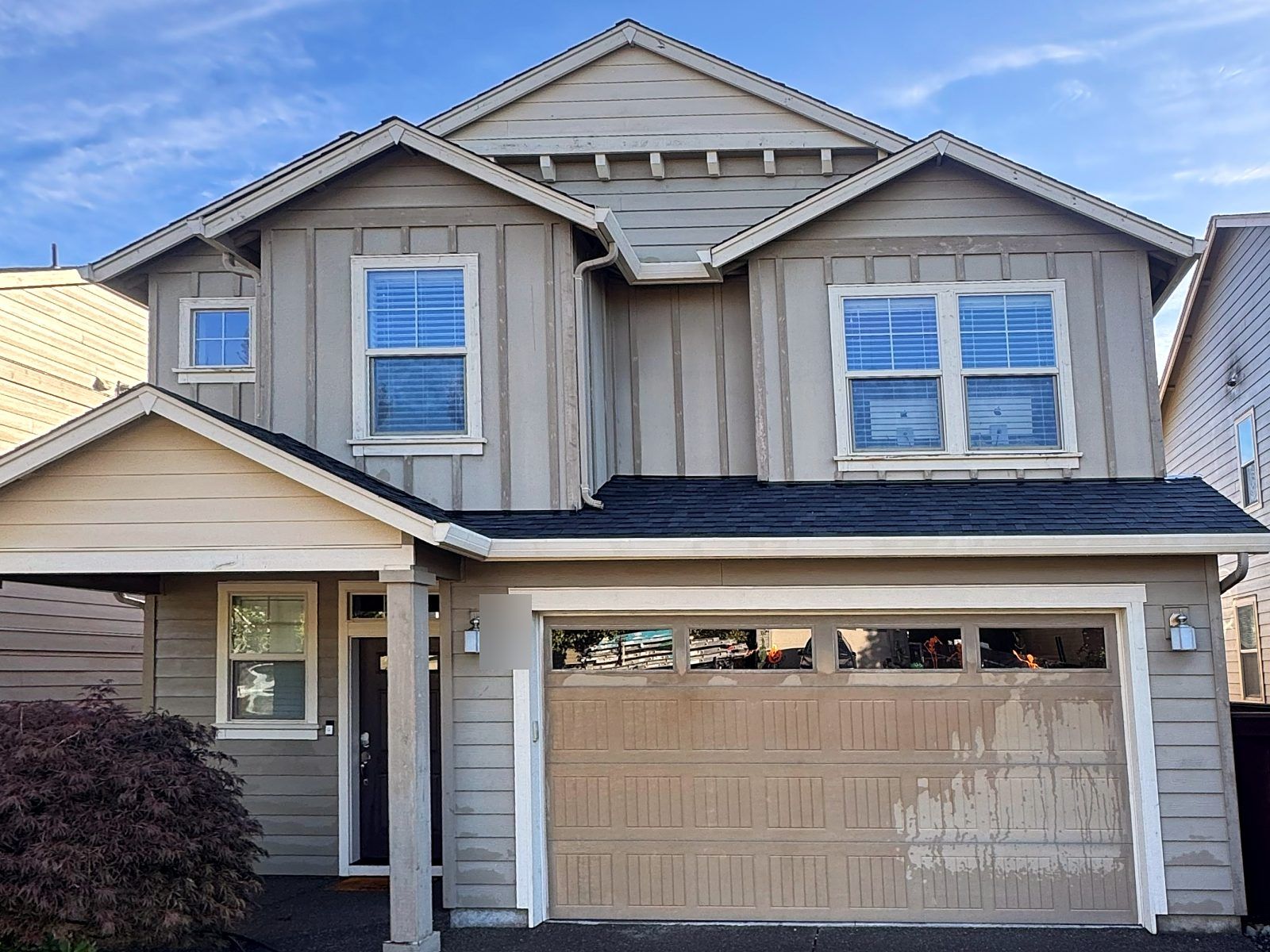
- Peeling. Paint lifting off in strips or flakes has lost its grip, and the wood under it is open to the weather.
- Cracking. Cracks in the paint let water in behind it. Left alone, cracking turns into peeling.
- Fading. Color that looks washed out, usually worst on the sunniest walls. On its own it's mostly a looks problem, but it shows how much weather the paint has taken.
- Chalking. Rub your hand on the siding. If it comes away with colored powder, the paint surface is breaking down.
- Bare wood. Anywhere wood shows through, rain soaks straight in, and wet wood is what decay fungi need. The USDA Forest Products Laboratory's Wood Handbook says wood that's kept air dry won't decay.
- Failing caulk. Caulk that's cracked, shrunken or pulled away at windows, doors, trim and corners lets water in behind the paint.
- Mildew. Dark spots or a gray-green film, usually on shady, damp walls. A wash takes it off, but it tells you that wall stays damp.
One more: if a sill or board feels soft when you press it, that's no longer just a paint problem. Read our guide to dry rot before painting.
How often to repaint
There's no fixed number of years between repaints, and a number given without looking at your house is a guess. How long a paint job lasts depends on:
- Sun. The sunniest walls fade and crack first, so two sides of the same house can be in very different shape.
- Water. Sills, trim and walls that stay wet wear faster, and shady sides collect mildew.
- The surface. The type of siding and trim, and the shape it was in when it was last painted.
- The last job. How well the surface was washed, scraped, caulked and primed, and which paint went on. Sherwin-Williams says Duration Exterior builds a thicker coat than ordinary latex, and that Emerald Exterior resists blistering, peeling, fading and dirt pickup.
- Upkeep. Fixing failed caulk and chipped spots early keeps water out between repaints.
So instead of counting years, watch for the signs above. The right time to repaint is when the paint stops protecting the wood, before water gets in. Do your walk-around in late winter or early spring, and you'll still have time to get an estimate and settle your scope before the season opens in April.
How to plan your repaint
- Look the house over. Use the list above and note the spots that worry you.
- Get a free estimate. Our estimator walks the outside of the house with you, looks at the siding and trim, and answers your questions. A free estimate gets you a written price.
- Settle the scope. You get a written scope with colors, Sherwin-Williams products, prep and timing, all in writing before we start.
- Pick a window. We schedule around the forecast within our April to mid-November season.
- Prep and paint. Our own crew handles the soft wash, scraping, sanding, caulking and priming, then the paint. We patch, sand, scrape and prime before any paint is applied.
- Walk it together. We walk the house with you at the end. If anything needs a touch-up, we handle it on the spot.
Your repaint is backed by our 5-year workmanship warranty. Ask us for the details.
Two more things to bring up at your estimate. Limited time: free Sherwin-Williams paint upgrade. Quoted SuperPaint, you get Duration; quoted Duration, you get Emerald. Ask us for details. And if you'd like to spread out the cost, there's $0 down and 0% interest for up to 21 months, on approved credit, through our lending partners.
Timing questions
What is the right time of year to paint a house exterior here?
Our exterior painting season typically runs from April through mid-November, and July and August are the driest months. Spring and fall work too, on dry days between showers, as long as conditions meet Sherwin-Williams' requirements.
How cold is too cold to paint outside?
Sherwin-Williams' exterior lines can go on down to 35°F, as long as the surface is dry and at least 5° above the dew point and no rain is expected for a few hours. Below 35°F, exterior painting waits.
Can you paint a house exterior in the rain?
No. The surface has to be dry, and no rain can be expected for a few hours. If the weather isn't right for painting, we may adjust the schedule.
How often should I repaint my house exterior?
There's no fixed number of years. It depends on sun, moisture, the siding, and the prep and paint used last time. Repaint when you see peeling, cracking, chalking, bare wood or failing caulk.
How long does an exterior repaint take?
Most exterior projects take about 2–3 days, depending on size, condition and weather.
Planning an exterior repaint? See how our exterior painting works and what drives the cost, ask about the free paint upgrade and financing, then request your free estimate or call (360) 607-3434.